Tuesday, May 30

I Want Pineapple

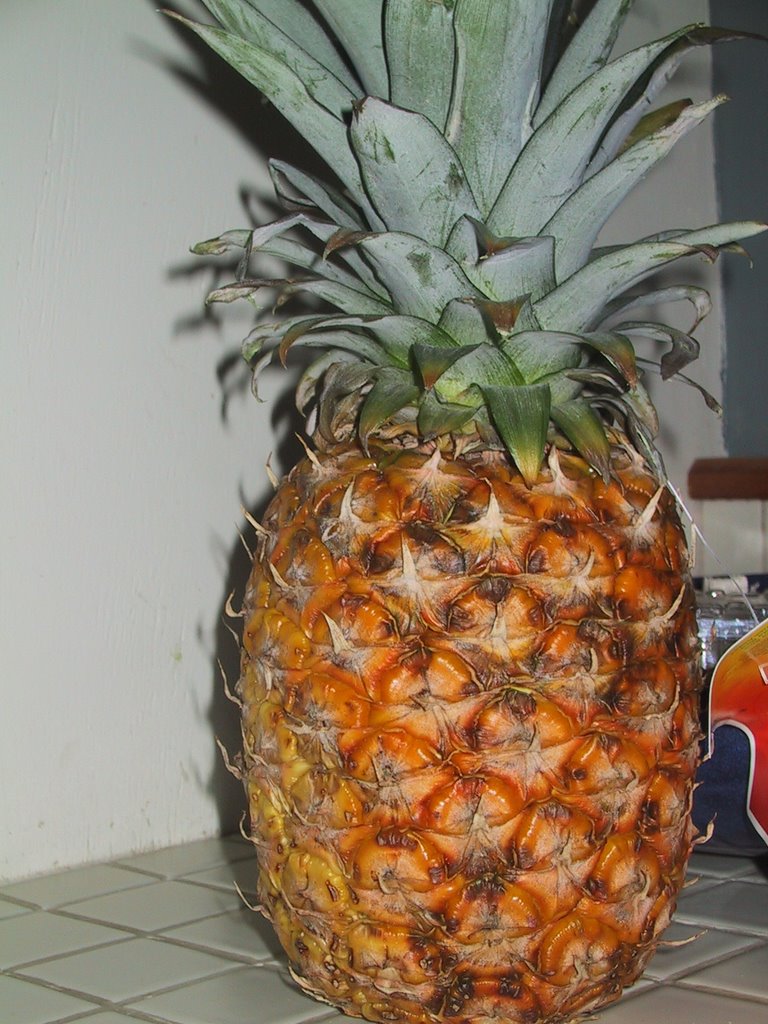
I want my pineapple. It sits on my counter top a soft prickled slump of tropical goodness ready for the asking. I smell its sweet scent and wish to poke it. It is too far away to touch it. I draw it instead- an eye that is slightly plump and golden, heavily delineated by a darkness that suggests the other side of ripe. Rot. I feel anxious knowing there is a precise moment that a thing reaches its peak. Before that moment there is a steady joyous climb of wait and thrill, an imagination egged on by memory. Noon is here and in a breath shadows grow lean and long. Will tomorrow be too late? I have another person’s time that is superimposed upon my own. I am clumsy moving about my life. Different pairs of hands and feet, sensibilities, and thought processes added atop my own. This brings to mind childhood 3 legged races and the difficulty of moving in unison as any person in relationship knows. Too much push and pull sends both people stumbling over one another. I long for elegant movement. How much I took this for granted in my earlier life, the ability to bring desire to life. The moment is Now-- I have watched and waited as green turns to gold…I want to eat pineapple! Open the drawer and pull out the right sized knife for the job. Grab the pineapple and place it gently on its side, respectfully. Slice both ends off, careful of the juices spilling forward. With a thinner knife edge gracefully alongside the interior contoured side. Voila, the naked fruit slips free from its rough nubby exterior glorious in unabashed ripeness. I would pause a moment I am sure- in appreciation of that exact moment in time; my patient deliberate actions coinciding with pineapple’s perfect peak existence.

Mint Julep Pineapple from Epicurious.com

This is for college Professor Mulcahy who used to cryptically remark during review while faintly looking off into the distance..."I can see myself drinking a mint julep in this corner of your space." None of us students could figure out what the heck that really meant, but we figured it was a favorable comment and our buildings were worthy of the official drink of the Kentucky Derby. To this day I have yet to drink from the silver julep cup. But when I saw this easy recipe on Epicurious and with a handful of fresh mint in the fridge, I knew that the moment was now.

Mix 2 Tblsp of good bourbon, 1 Tblsp superfine sugar and 1/2 cup chopped mint into a bowl for about 20 minutes for flavors to blend. Strain the syrup through a sieve to capture the spent mint. Meanwhile skin, quarter, core and chop a ripened pineapple into 1/8" pieces. Place fruit and mint syrup into bowl and throw in a few extra whole mint leaves. Mix and chill. Enjoy in an elegant well lit space with genteel company.

Saturday, May 27

Friend bearing beans

I never thought myself a friend of the bean, but more a distant acquaintance. While I modestly enjoy them at the occasional picnic dolled up in a thick rich molasses sauce alongside some fresh summer corn and smoky barbeque, bean involving events come none too often and a spoonful is about all I need of the starchy legume. Then one afternoon they came calling alongside my friend Jeanie, unassuming, nestled within a recycled yogurt container. My friend is a fabulous cook and I had no reason to doubt her culinary creation. But I must admit to a slight internal nose scrunch upon hearing, she came bearing beans. I mean really, beans? Not double chocolate espresso brownie bars or hunky chunky rip-me-up-roaring cowgirl cookies or even beautiful silky nubs of homemade truffles? My eyes did not deceive; the vision on the counter was no dream. And while I politely embraced the beans with plans for a full investigation to be held later, I quietly listened to the story of three friends, a pot of black beans and a friendship sustained over years. The details of the tale are unimportant but what moved me then and has remained with me over the years, was their commitment to weekly feed the relationship over a simple but delicious meal of black beans and rice, kale and plantains. Reflecting upon this time of communal eating, my friend shared how seemingly random this group of friends was, how the decision to lunch casually fell together and how the meal became a cherished touchstone in the well of her busy life; one that would not last forever with the untimely death of her friend. By the end of the story, the once unassuming beans took on a weightier kind of presence. They were no longer food substance hastily slid out of a can partnered up with some random picnic buddy. They became symbolic- and I already knew that I would love these beans. And that this recipe of friendship and memory would be added to the others, banked and cherished; made and shared for other such alchemical moments.

Black Beans with Ham Hocks, Cilantro and Lime
serves 6 adapted from Stephanie Lyness's article in Jan/Feb 1998 of Cooks Illustrated

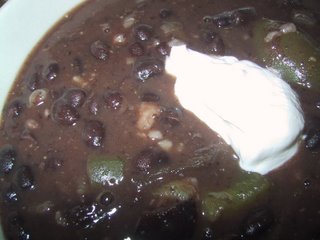
My full investigation introduced me to an extraordinarily creamy bean with layers of infused flavor. These beans are mildly sweet and earthy, slightly smoky and very grounding.

Beans:
1 pound black beans picked over and rinsed
12 C water
1 smoked ham hock
1 green bell pepper stemmed, seeded and quartered
1 medium onion minced
6 garlic cloves minced
2 bay leaves
1 1/2 tsp salt


Sofrito:
2 tblsp olive oil
1 medium onion minced
1 green bell pepper stemmed, seeded and minced
8 medium garlic cloves minced
2 tsp dried oregano
3/4 tsp salt or to taste
2 tsp ground toasted cumin
1 tsp ground toasted coriander
1 tblsp lime juice
1/2 C chopped cilantro

Instructions: Bring bean ingredients to a boil over medium high heat in a heavy soup container. Skim off scum. Reduce heat to lowest possible simmer, adding more water to ensure the beans are always covered. It is the slow cooking that allows the flavored broth to seep into the bean creating a full flavor and velvety texture. Keeping the beans covered with enough water ensures that they cook evenly. Partially cover with lid and cook until beans are tender but not burst (they lose flavor!), about two hours. Remove ham hock from beans. When cooled, discard bone and skin (which I admit I did not, hey I like the chewiness...) and cut meat into bite size pieces. Set aside. Fry up all the ingredients for the sofrito except for the lime juice and cilantro, for about 8-10 minutes. Scoop about 1 cup of beans and 2 cup of liquid into the sofrito pan. Mash beans with a potato masher and simmer until mixture thickens about 6 minutes. Transfer the sofrito mix back into the bean pot and simmer until beans thicken about 15 minutes longer. Add lime juice, cilantro and ham hock and season to taste with salt and pepper. The beans are good as is or over rice. They can be garnished with a dollop of sour cream, some minced onion and a kick of hot pepper sauce.


Saturday, May 20

What has been hidden

While it has been over a year since moving from one coast to the other, some of the changes are just beginning to sink in for me. For one thing, the seasons are dramatically different. The Bay Area is relatively the same all year long. On the west coast, it takes a person several years of close attention to begin to distinguish between the seasons. There isn’t the quarterly ritual of bringing out seasonal clothes heralding the upcoming changes in weather. In this neck of the woods, it is quite another story. One needs a separate wardrobe for each season. I came grossly unprepared and within a month I was initiated with my very own stay-puff down jacket, various helmet-head producing hats and puffy booties, reminiscent of moon boots circa the 80’s. When I last resided in the East, winter had a great rap. The snow and its trimmings were associated with Santa, hot chocolate, snow ball fights, running around slipping-n-sliding and the magic of a hoped for school closing. Now that I am older and those that I jet around with are older too, winter seems to wear out its welcome pretty fast. Before the first snowfall, there is palpable anticipation that quickly turns into a frozen grimace-and-bear-it countenance. By the time spring comes, there is a collective audible sigh of relief for making it through yet another season of ice and freeze.

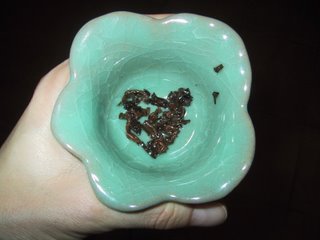
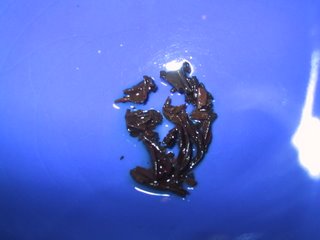
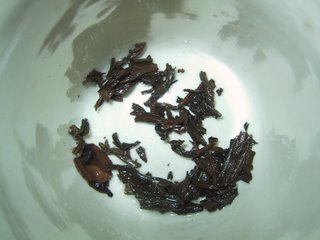
These past 6-8 weeks I have been in a kind of tween season reverie. Just like my environment, I am slowly absorbing and relaxing into my new home and the obvious mental observations that I took in last year are hitting me differently. My eyes have been fixed upon a curious ovoid shape of earth surrounded by an asphalt moat in the front of the home where I live. During the frozen months, the entire garden is silenced under a crystalline pillow which blots out any discernible landmarks. As the icy entombment melts, the bones of the garden are revealed. At first thin twiggy shrubs and stick trees collaborate with stoic rock borders to reveal nothing short of soldierly conduct. There is actually a brief period when everything within seems to hold its breath in fear of a sneak attack blast of cold. And then it is as if every member of Eden knows to relax and the birds on cue begin to sing. The soil plumps from grit dirt grey to luscious loam cocoa. Tiny pale green sprouts poke their heads through the dirt to later surge, climb and sprawl. Every day form pushes through from the underbelly of life, and it is always new, eternally exciting and highly articulated. As I circumnavigate this fecund womb I cannot help but be pulled into the soup underneath. Day after day I read with studied anticipation the stories newly formed on the surface. Atop, I revel and remark upon the bright shiny faces of newly blushed flowers. But I travel in secret wonder from petal to stem- down shoot to root to seed in dark silent question. In honor of staring into the mystery, my taste buds seek out exotic Lapsang Souchong, a black tea from China that is smoked over pine boughs to impart an aged tarry depth to its brew. It is a tea that startles me with its pale honeyed color and thin liquor. After inhaling a rich nose full that hints of raisin, tobacco and a tint of astringent resin, I expect a mouthful of something fuller and more substantial; something that I can chew, perhaps something like a milkshake. But this is part of its complexity. Lapsang is assertive and bracing, then warm and lingering. It is finally and delightfully a surprise in delicacy. After a half-hearted futile search for Lapsang that spanned over a year, I finally broke down and ordered some online from Upton Tea Imports, self proclaimed purveyor of the world’s finest loose teas. My tea finally “shows up” after two medium winters and the jagged beginnings of a mild but wet spring, it has been a long time coming. While I had great plans for this come-from-afar elixir that involved a certain recipe, or rather the memory of a photograph of exquisitely crackled, bronze patina quail eggs in a gravel nest of salt, I fumbled. Or rather, I pinned down when I should have let loose. First, I racked my brains for the recipe. I forewent the pricey order of delicate quail eggs from D’Artagnan in favor of ungainly chicken eggs. I splashed together a flavor dye bath of strong tea, dark soy sauce and Chinese Five spice. I submerged the final two of my dozen, cracked hard boiled eggs into the mixture for a day before the planned unveiling and subsequent photo shoot. And like a reflection in an interrupted pool of water, the dream and hope for my tea eggs appeared and then flittered and flickered before vanishing. They were a sadly bruised and stained pair, nary a crackle in sight- I hardly wanted to shame them further by photographing them. Discouraged and dismayed, with nothing in my hand other than a cup of tea, I happened upon this quote:
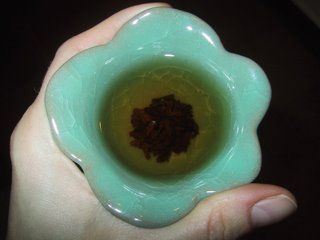
“Nothing is so strong as gentleness” – Ralph W. Sockman

And it became clear. Clear as what I held in my two hands, that all I needed to do was to look—to see. And so I did.


Wednesday, May 10

To be or not to be...good

There many things I wanted to be in life. Good was not one of them. This was probably due to the fact that I was under the yoke of “good” for more than half of my life: the good girl, the good student, the good musician, the good friend. Being “good” was a too tight girdle. I wanted to be audacious. I yearned to be the sassy songstress belting out a tune while dancing the tango atop the cafeteria table; wished to be the one who snuck out of my bedroom window in the middle of the night to howl at the moon; I dreamed of stowing away on a ship to make my way in a foreign land drinking spider web tea and eating smoked camel jerky. Instead, I wore beige Shetland sweaters and penny loafers and studied…a lot.

I became the reliable one, the predictable one, the unobtrusive one. One of my co-workers after college actually pegged me as a “quail” according to some made-up hitherto unknown bird hierarchy. It was good natured ribbing that secretly had me wishing that I were an eagle. I also must confess to being called “vanilla” from time to time. Though I liked vanilla well enough, the adjective in connection to my personage suggested someone dreadfully bland, mild, and ordinary; a disdainful image for someone with a distinctive inner wild child.

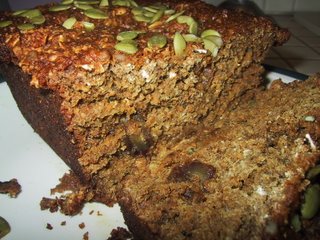
A fine summer night a few years ago, I had the good fortune of landing some Good Brown Bread for my evening repast. It was a moist chewy assertive bread stuffed with figs and sunflower seeds. Ironically, it elevated my meal from good to bone sighing outstanding. In fact the rest of the meal fell to the way side and all that stood out and apart, was this manna from heaven. This gift came wrapped in a glitter of foil teased shut with a thin scarlet ribbon of rickrack. I was charmed and later wowed, and a day later rationed out the last of this bread as if it were my last meal on earth. What I did not know but later discovered was how “good”, as in wholesome this bread really was. If ingredients could go to school, these would be signed up for AP classes. They would be getting straight A’s, leading the debate team and be head of the student council. They pack a mean punch of fiber, iron, potassium and other minerals all under the dressing of low fat. This is bread that dutifully works to fill and fortify when breaking the fast. It has enough character to buoy up a flagging soup or salad. It can be thought of as an alternative to decadent dessert with a slather of cream cheese on its back side. I have even thought about throwing out the sandwich handbook and dressing up this bad boy (err I mean good…) with some turkey, Swiss cheese, aioli and a pile of arugula. And last but not least, Good Brown Bread bakes up nicely into a compact effortlessly sliceable loaf. It is excellent for sharing. Alright, so maybe good is not so bad after all.
Good Brown Bread a recipe given to me by excellent friend Miriam Valesco.
Ingredients:
1 1/4 Cup 7 or 9 grain cereal (Orowheat has several varieties)
3/4 Cup spelt flour
1/2 Cup wheat germ
3/4 Cup oat bran
1/2 tsp salt
2 Cup buttermilk (I often substitute 1Cup plain yogurt & 1Cup water)
2 tsp baking soda
1/4 Cup honey
1/4 Cup molasses (I skip the honey and use all molasses)
dried nuts and fruit (I am partial for fresh cranberries and dried dates w/pecans)

Instructions:
Mix dry ingredients except for baking soda into medium sized bowl. I next add my dried nuts and fruit into the dry bowl so that the flour will help keep the sticky fruit from clumping. I then mix the buttermilk with the baking soda in a separate bowl. After, I mix the molasses/honey into the buttermilk. Dump the wet stuff into the dry and fold gently. Do not stir too much or mixture will toughen. Pour batter into greased 8 1/2 x 4 1/2 x 2 1/2" pan. Bake loaf for about 1 hour at 325 degree F oven. Check doneness with toothpick. Serve with butter or cream cheese. Loaf keeps about 1 week refrigerated.

Tuesday, May 9

The Nine Lives and Loves of Sa-Squash

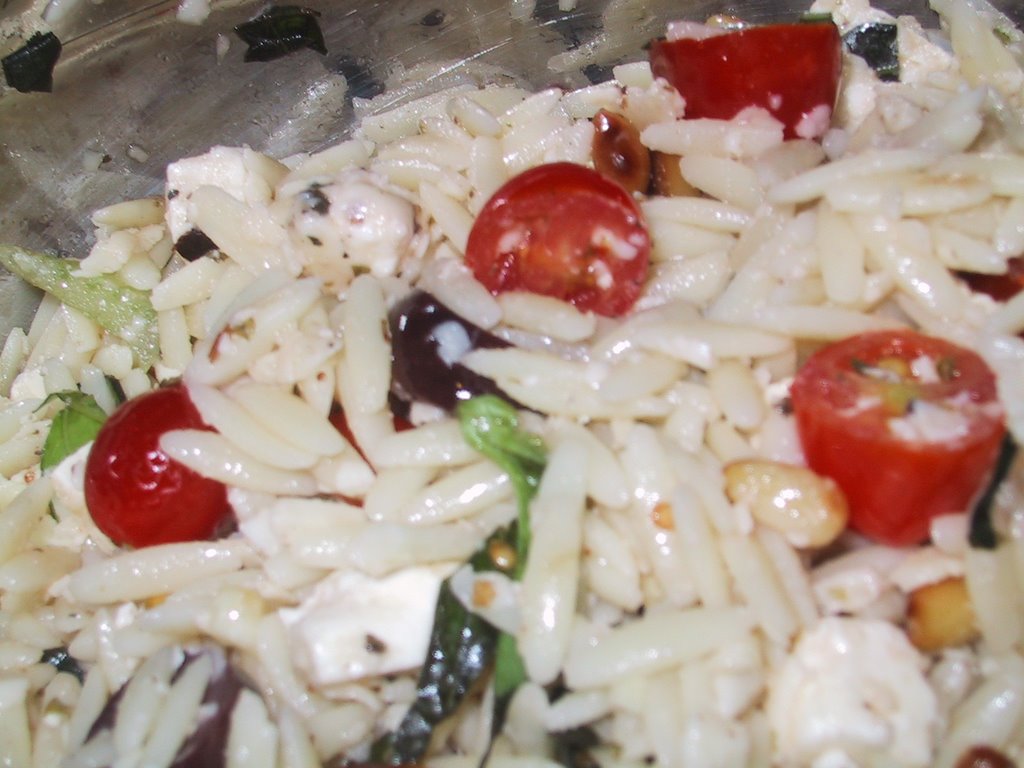
I knew I was in trouble. The butternut squash had been sitting there in that same reclined position about a week too long. I was distracted by a large shiny bowl full of Orzo with Everything and its compadre, a kicky lentil salad full of currants, parsley, shallots and toasted walnuts luxuriating in a caramelized balsamic vinaigrette. By the time I came up for air and wiped the orzo from my face, it was too late. The squash suffered from serious blemishes to its posterior side and it was apparent that we needed to go in and remove the offending area. While it first seemed hopeful that the blight was localized, we noticed something far more disturbing- a vast pithy center approximately ¾” in diameter. Not to be deterred I forged forward, encouraging H to make deft cuts with her knife, “Peel, Chop, Core!” Overwhelmed with a heap of exhausted squash, it was clear the butternut needed to quietly disappear for awhile, so into the chilly depths of the freezer it went.

A few days later, prompted by the need to have more food to fill my now empty shiny bowl, sa-squash re-emerged fiercer than ever. I was low on inspiration and even lower on the love, but duty called I needed dinner. Into the pot the squash tumbled, some chicken stock thrown in with a few shakes of curry. By now I understood J’s penchant for salt (soy sauce in particular, which means that I really need to pay attention when she is close to the bottle) and all things sugar. Spice however, she does not tolerate well. Her eyes typically bug out when I list the spices that I need for a particular recipe. This day, each urge for “More Curry” is met with a doubtful look of fear and concern and an increasingly timid shake of the hand. Upon my fourth request (I am guessing the total amount was equal to a bit under ¼ tsp), she set the jar down and brightly announced, “It is better to put in too little than too much. You can always add more, later!” Thwarted, I silently rolled my eyes to the back of my head while I assessed the situation. With this stalemate I am dealt the discomfort of setting firm culinary boundaries. Really I am afraid that I may begin screaming obscenities and charge at said person with wheelchair. On this day, I knew the food situation was dire and becoming beastlier by the moment.

The finishing touches were close at hand. The squash was brewing tenderly in its broth. Half the contents were added to the blender with some soy milk-- vanilla soy milk to be precise. Yes, an unconventional choice but this is all that I had. In other situations, I think that this could have worked to underscore the sweetness of the squash and round out the curry. But this was sa-squash, it had a whole lot o’ living thrown at it and mostly while under my charge. At this point I asked for two shakes of cayenne pepper to be thrown in. I am strapped into this motorized machine which assists me in building my leg muscles and I am a good 15 feet away from the kitchen. Out of the corner of my eye I witnessed two aggressive flails of the arm and a tiny red cloud aftermath. I gasped in horror but tried to recover composure quickly so as not to alarm J who is honestly doing her best to cook according to my free wheeling instructions. Calmly, I added more insult to injury by dousing the flame of heat with more soy milk, which of course just highlighted the vanilla. The soup was blended. It was a rough food day.

Now really, if I had more sense that would be the end of the story. But it was hard for me to let it go, I hate food defeat. I did my very best to enjoy this soup with a dollop of yogurt and a friendly sprinkle of parsley. It was atrocious. “But under the proper circumstances, this could work…” said the provocateur within. And then and there it was decided that the contents would be divided amongst eight baggies* (approximately six tablespoons of sa-squash in each) and sent to the deep freeze once again for future adventures. Nine lives, only eight more to go.

*which I attempted to document for you, curious reader but the result was a very unappetizing shlumpy plastic-y mess.

Thursday, May 4

Got Miyeok-Guk?

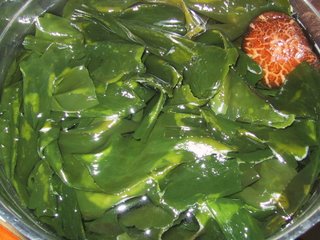
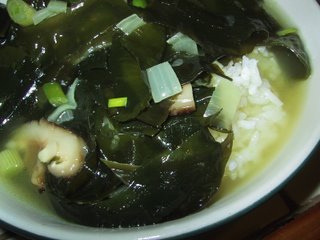
I want to get lost in a cavernous bowl of soothing broth redolent of the tides and the oceans- of seaweed. For me this soup is the clarion call from my childhood, tunneling through the years finding me in whatever current configuration I might be in; holding me steadfast and strong. For the last few weeks I have been searching for this place of comfort unaware that I have somehow come loose from my mooring.

J_ recently asked me ‘What My Top Five Comfort Foods Are’ as part of our getting-to-know-each-other talks. I considered my response needing more specifics. What would my emotional, mental, physical, spiritual profile be? Do I need comfort due to a slightly blue mood or have I been suffering from protracted earth shattering devastation? I carefully weighed the merits of tapioca pudding vs. cheetos, delicate soft boiled eggs with buttered toast or a bowl of cornflakes. I got so involved with the different variables I told her that I really could not answer because the comforter must be a direct remedy to the emotional makeup of the moment. Two weeks later this question still sounds in my head but this time I hear the repetitive echo of waves pounding, “Miyeok-guk, miyeok-guk…”

There is very little food wise that I need to retrieve from my childhood. Don’t get me wrong, I enjoy my mother’s cooking and like Korean food as an exclamation point amidst my diet every now and then. In fact, I wish that I had paid more attention to mom’s natural and intuitive ways in the kitchen. But my emotional constitution was weaker then, the food too bold and forceful for my taste. It stood up in a room and seized attention while I preferred to watch from the side: fiery kimchi brining in oversized mayonnaise jars huddled in the back of the fridge, salty pungent jjigae spewing bubbles from a piping hot stone bowl as it is brought to the table, plates of shredded stinky dried fish. Salt, Garlic, Fermented soy bean, Raw squid and Shrimp paste! These are some of the sights and tastes of The Land of the Morning Calm and while I am a descendent of these colorful people, I wanted watery broth. I dove into bowl after bowl of this nutritionally rich soup teeming with ink-green velvet slubs of ocean vegetation as if it were some lifeline then. I did not know that generations of Korean women ate this soup after giving birth to give them back their strength; the concentration of minerals and nutrients from the seaweed said to clean the blood, contract the uterus and encourage breast milk. Clearly restorative, I crave this ocean elixir now.


Alongside the excitement over this month’s birth of FOODChair, I am making side trips to outlying areas of sadness and grief. With the drafting of ideas, the food styling and prep, the scheduling of my cooking crew and the telling of stories- I am composing a recipe of my present. Sometimes the details of my life come into focus take shape and stand in jarring contrast to my past like a Gordon Matta-Clark photograph. Other times, the current moment unravels swiftly into a memory from the not far distance: one of banana pancakes on Saturday mornings dancing with my then-husband, the designing of our home in the Redwoods, celebratory dinners with friends alive with merriment. I remember having arms that can paint, lift, chop, mix and most importantly, hold. Food and the meals that I cook, take me to the heart of my life and central is a table for sharing and nourishing relationships. While the chairs at my table are being reorganized, top center stands a magnificent tureen full of soup which promises to reconstitute the hollow places within. The work of re-membering my life into fullness continues and seaweed is the tonic which will bring me back home. Miyeok-Guk: serves 4
Ingredients:
1 oz. package of dried wakame. If new to this soup I recommend starting with 1/3 of a package.

9C of vegetable or chicken broth
½ a small onion cut into thin slices
1 teaspoon of minced garlic
Few grates of ginger
A few sliced shitake mushrooms
Soy sauce or brown rice miso to taste
2 teaspoons of sesame oil

Finely chopped scallions for garnish

Directions:
Break seaweed into approximately 1” pieces and then soak in water for two hours or until soft. Drain and rinse seaweed. Put broth, onion, garlic, ginger and mushrooms into a large pot and bring to a boil, then simmer until onions look translucent. Add the seaweed, sesame oil and soy sauce or miso (make a slurry with some of the broth in a separate bowl and then add to the pot, do not let the broth boil once the miso is added) and cook a remaining five minutes to allow all the flavors to come together. Turn the fire off and sprinkle with chopped scallions. Enjoy this soup with a bowl of rice.